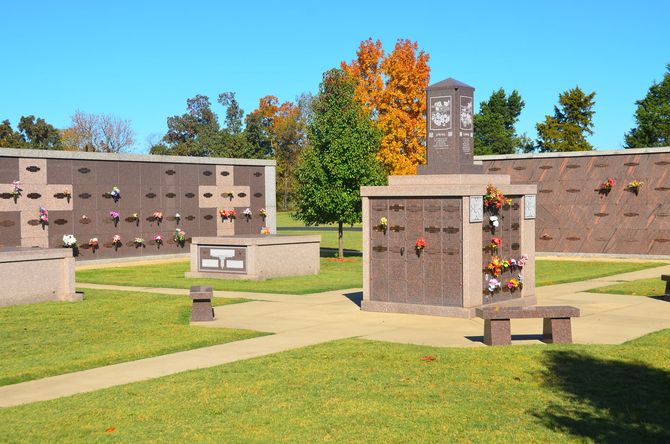
Kirby's Tucker Memorial Crematory

What happens during the cremation process?


The casket or container is placed in the cremation chamber, where thetemperature is raised to approximately 1400 degrees to 1800 degrees Fahrenheit.After approximately 2 to 2 1/2 hours, all organic matter is consumed by heat orevaporation. The remaining bone fragments are known as cremated remains. Thecremated remains are then carefully removed from the cremation chamber. Anymetal is removed with a magnet and later disposed of in an approved manner. Thecremated remains are then processed into fine particles and are placed in atemporary container provided by the crematory or placed in an urn purchased bythe family. The entire process takes approximately three hours. Throughout thecremation process, a carefully controlled labeling system ensures correct identification.


How hot does the cremation chamber get?


The optimum temperature range is 1400 degrees to 1800 degrees Fahrenheit forthe cremation chamber.


How long does it take to cremate a body?


Cremating at the optimum temperature (1400-1800 degrees), the average weightedremains takes 2 to 2 1/2 hours. Several more hours may be required before thecremated remains are available to the family.


Are cremations done individually?


Yes. State law generally provides that only one body may be cremated at a time.However, in some states, the remains of family members may be cremated togetherwith the consent of the next-of-kin.


Is the body exposed to an open flame during the cremation process?


Yes, the body is exposed to direct heat and flame. Cremation is performed byplacing the deceased in a casket or other container and then placing the casketor container into a cremation chamber or retort, where they are subjected tointense heat and flame.


When after death can a cremation take place?


Because cremation is an irreversible process and because the process itselfwill eliminate any ability to determine exact cause of death, many statesrequire that each cremation be authorized by the coroner or medical examiner.Some states have specific minimum time limits that must elapse before cremationmay take place. Your local funeral service provider can advise you ofapplicable regulations, if any.


Is any other preparation required prior to cremation?


It is essential that pacemakers and other medical devices be removed prior tocremation. They may explode when subjected to high temperature, which can behazardous to crematory staff and equipment. In addition, any special mementos,such as jewelry, will be destroyed during the cremation process. Anything youwish to keep should be removed by the funeral director before the casket orcontainer is transferred to the crematory.


Is it true that the bones are crushed after cremation? I've heard youdon't get ashes back -- what do you get?


A complete cremation is a two-step process. Firstly, the actual exposure of thedeceased to several hours of intense heat and flame; after which the remainsare mostly ash except for certain bone fragments, then the entire remaining ashand fragment volume is gathered and run through a processor, creating a uniformpowder-like texture.


Why is refrigeration of the remains necessary?


Due to the irreversible nature of cremation, most states require a waitingperiod before the actual process may begin. Unless a body is embalmed,refrigeration is the only alternative available that will retard tissuedecomposition. Refrigeration is a necessity that protects family and friends,the crematory operator and the general public from potential health hazards.


Is embalming necessary for cremation?


No. In most cases, it is your choice. It may depend on such factors as whetherthe family selected a service with a public viewing of the body, whether thereis to be a funeral service, or whether there is refrigeration available.Embalming may also be necessary if the body is going to be transported by airor rail, or because of the length of time prior to the cremation.


Is a casket required?


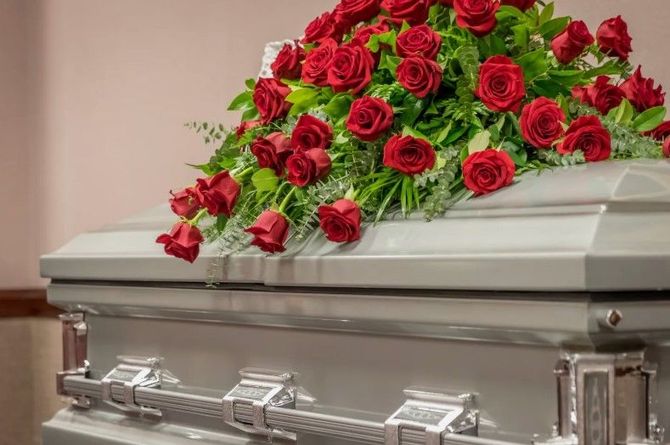
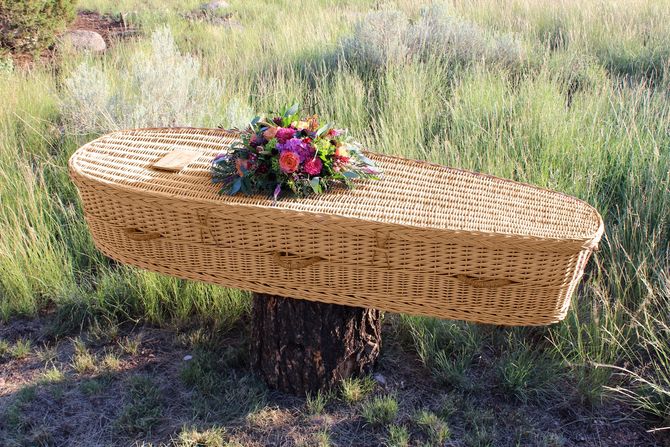
No. For sanitary reasons, ease of placement and dignity, many crematoriesrequire that the deceased be cremated in a combustible, leak proof, rigid,covered container. This does not need to be a casket as such. What is requiredis an enclosed, rigid, container made of wood or other combustible material toallow for the dignified handling of human remains. The type of casket orcontainer selected is really a personal decision. Caskets and containers areavailable in a wide variety of materials ranging from simple cardboardcontainers to beautifully handcrafted oak, maple or mahogany caskets.


Are there special cremation caskets?


There is a choice of very affordable cremation caskets that are completelycombustible. The selection includes options from a simple pine or cloth-coveredcasket to a hardwood casket.


Can a casket be rented instead of purchased when choosing cremation?


Many funeral homes offer a hardwood ceremonial casket for viewing or funeralservices prior to cremation. The ceremonial (or rental) casket is specificallydesigned to provide a very aesthetically pleasing, affordable andenvironmentally prudent alternative to purchasing a casket for a cremationservice.


Can I bring my own urn?


Yes — It would be advisable that you discuss this situation with your cremationprovider prior to the cremation. The size of your urn will be of greatimportance if you plan to have all of the cremated remains included in this container.


Can I watch the cremation?


Arrangements can usually be made through the funeral home or crematory forrelatives or representatives of the deceased to witness the cremation.


Do all funeral homes and cemeteries have a crematory?


No - actually only a small percentage of cremation service providers have theirown cremation units.


Is cremation a substitution for a funeral?


No, cremation is simply a method of preparing human remains for finaldisposition.


Do I have to make different funeral arrangements if I chose cremation?


It really depends entirely on how you wish to commemorate a life. One of theadvantages of cremation is that it provides you with increased flexibility whenyou make your funeral and cemetery arrangements. You might, for example, chooseto have a funeral service before the cremation; a memorial service at the timeof cremation or after the cremation with the urn present; or a committalservice at the final disposition of cremated remains. Funeral or memorialservices can be held in a place of worship, a funeral home or in a crematory chapel.


Can we have the service before or after the cremation?


It's completely a matter of family preference. Many times when a family issplit regarding the decision to cremate, a compromise may be achieved by havinga traditional service first - to be followed by cremation.


What can be done with the cremated remains?


With cremation, your options are numerous. The cremains can be interred in acemetery plot, i.e., earth burial, retained by a family member, usually in anurn, scattered on private property, or at a place that was significant to thedeceased. (It would always be advisable to check for local regulationsregarding scattering in a public place.) Cremation is just one step in thecommemorative process—the preparation of the human remains for memorialization.Today, there are many different types of memorial options from which to choose.Memorialization is a time-honored tradition that has been practiced forcenturies. A memorial serves as a tribute to a life lived and provides a focalpoint for remembrance, as well as a record for future generations. The type ofmemorial you choose is a personal decision. The limit is set only by your imagination.


Can I scatter the remains on private property?


Yes, with permission of the owner.


What is memorialization for a cremation?


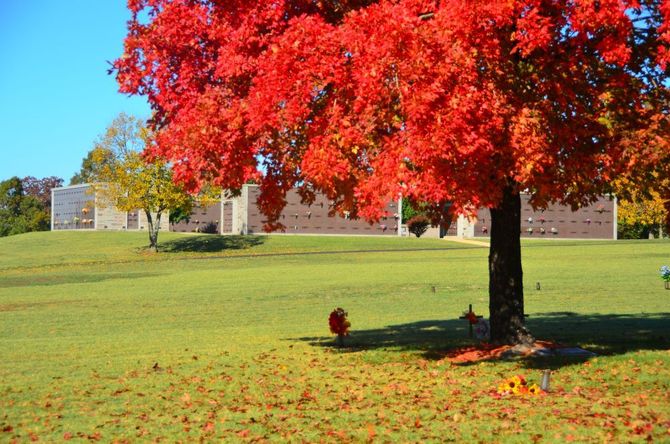
You might choose ground burial of the urn. If so, you may usually choose eithera bronze memorial or monument. Also available at many cemeteries are cremationniches in columbariums. They offer the beauty of a mausoleum setting with thebenefits of above ground placement of remains. Many cemeteries also offerscattering gardens. This area of a cemetery offers the peacefulness of a serenegarden where family and friends can come and reflect.


What is a columbarium?


A columbarium, often located within a mausoleum or chapel, sometimesfree-standing, either indoor or outdoor, is constructed of numerous small compartments (niches) designed to hold urns containing cremated remains.


If I'm going to be cremated, why would I want my remains to be placedin a columbarium, or interred or scattered at the cemetery? Why shouldn't Ijust have them scattered in the sea or in some other place of my choosing?


As long as it is permitted by local regulations, the cremated remains can bescattered in a place that is meaningful to you. This can, however, presentdifficulties for your survivors. Some people may find it hard to simply pourthe mortal remains of a loved one out onto the ground or into the sea. If youwish to be scattered somewhere, it is therefore important to discuss yourwishes ahead of time with the person or persons who will actually have to dothe scattering. Another difficulty with scattering can occur when the remainsare disposed of in an anonymous, unmarked or public place. Access to the areamay be restricted for some reason in the future, undeveloped land may bedeveloped, or any of a host of other conditions may arise that could make itdifficult for your survivors to visit the site to remember you. Even if yourcremated remains are scattered in your backyard, what happens if your survivorsrelocate sometime in the future? Once scattered, cremated remains cannot easilybe collected back up. Having your remains placed, interred or scattered on acemetery’s grounds ensures that future generations will have a place to go toremember. If remains are scattered somewhere outside the cemetery, manycemeteries will allow you to place a memorial of some type on the cemeterygrounds, so survivors have a place to visit that will always be maintained and preserved.


Why is having a place to visit so important?


Because it provides a focal point for memorializing the deceased. To remember,and be remembered, are natural human needs. Throughout human history,memorialization of the dead has been a key component of almost every culture.The Washington Monument,Tomb of the Unknowns and Vietnam“Wall” in Washington,D.C are examples of memorialization which demonstrate that, throughout ourhistory, we have always honored our dead. Psychologists say that remembrancepractices, from the funeral or memorial service to permanent memorialization,serve an important emotional function for survivors by helping to bring closureand allowing the healing process to begin. Providing a permanent resting placefor the deceased is a dignified treatment for a loved one's mortal remains,which fulfills the natural human desire for memorialization.


If I am cremated, can I be buried with my spouse even if he or she wasin a casket?


Yes — Depending upon the cemetery's policy, you may be able to save a gravespace by having the cremains buried on top of the casketed remains of yourspouse, or utilize the space provided next to him/her. Many cemeteries allowfor multiple cremated remains to be interred in a single grave space.


Can I take the cremated remains home?


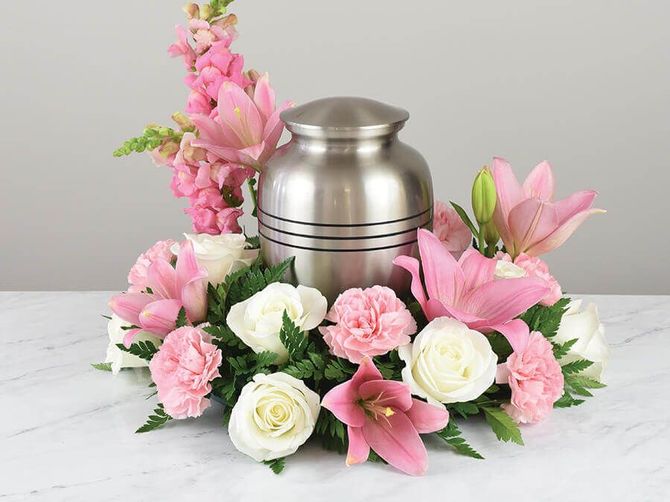
Yes. The remains are normally placed in an urn. Most families select an urnthat is suitable for placement on a mantle or shelf. Urns are available in avariety of shapes, sizes and materials.


How big of a price difference is there with cremation compared tostandard ground burial?


The cost depends on the type of permanent memorial, location of the memorial,urn and placement selected.


Do all religions permit cremation?


Some religions prefer cremation; some do not recommend the practice; mostpermit you to choose. Should you have any questions or concerns, we suggest youspeak with a member of your clergy, or contact your local prearrangementprovider.


Kirby & Family Funeral & Cremation Services
600 Hospital Drive
Mountain Home, AR 72653
870-425-6978